Contents
Over five days, this beginner-level course will move from the basic concepts of DNA barcoding and metabarcoding to hands-on lab work, sequencing, and data analysis. While the course will focus on insect/arthropod metabarcoding the methodology can be tailored for different groups of organisms or even eDNA metabarcoding. Participants are welcome to collect and bring their favorite insects/arthropods from their own gardens so we can explore and analyze them together.
Learning outcomes
By the end of this course, you will have:
- Basic understanding of concepts and the capabilities of metabarcoding
- Learn how to design and perform a basic metabarcoding project from DNA extraction to amplicon sequencing to data analysis
- Gain hands on experience in amplicon sequencing using 3rd generation Oxford Nanopore sequencing technology
- Basic experience in analysing your own ONT amplicon data as well as training sets of illumina data
- Basic experience with follow-up statistical analyses
Tentative Schedule
- Monday 9 March:
Morning: Introduction and workshop objectives, metabarcoding theory and experimental design. What barcoding and metabarcoding are, applications, sequencing platforms overview, sampling design, marker genes and an overview of laboratory workflows.
Afternoon (Laboratory practices): DNA extractions and dilutions - Tuesday 10 March
Morning (Labaratory practices): PCR and indexing, electrophoresis gel preparation
Afternoon (Laboratory practices): Gel electrophoresis, cleanup, quantification (gel/Qubit) and library pooling. - Wednesday 11 March:
Morning (Laboratory practice): Next Generation Sequencing. Preparing and running Oxford Nanopore (MinION) sequencing,
Afternoon: Bioinformatic pipeline’s introduction. Oxford Nanopore pipeline and comparison with Illumina approaches. - Thursday 12 March:
Data Handling & Bioinformatics
How to work with amplicon sequencing data: Overview of amplicon sequencing data formats, basecalling, QC, demultiplexing MinION data, and taxonomic assignment using BOLD. An introduction to Illumina amplicon data processing. - Friday 13 March:
Post-processing & Basic Stats
Final data processing, data visualization and basic diversity analyses using Illumina and MinION data
Lecturer
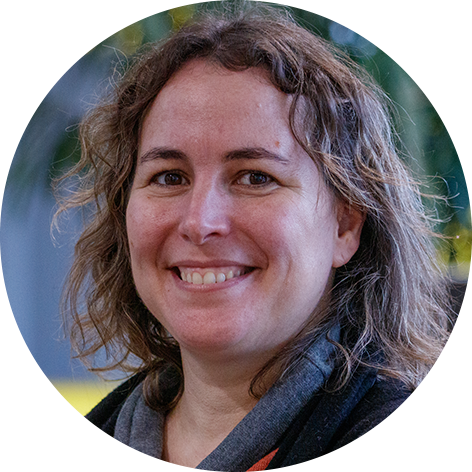
Dr María Méndez Camarena
Maria has extensive experience applying molecular approaches to biodiversity research and conservation, with a strong focus on DNA, eDNA, and iDNA metabarcoding. She has broad expertise in both laboratory workflows and bioinformatic analyses and currently leads the iBarc Support Unit at iDiv.

Dr Stefanos Siozios
Stefanos has extensive experience using next-generation omics approaches to study the taxonomic and functional diversity of insect-associated microbial communities. He is particularly interested in applying nanopore sequencing methodologies for insect metabarcoding and microbiome analysis.