Content
Plant collections provide an ecologically valuable resource and range from living collections in botanical gardens, to stored collections in seed banks and herbaria. For many decades, collections have been primarily used to support taxonomic and systematic research. However, interest in using biological collections to capture, analyse, and understand plant or ecosystem responses to changes in land-use and climate continues to grow.
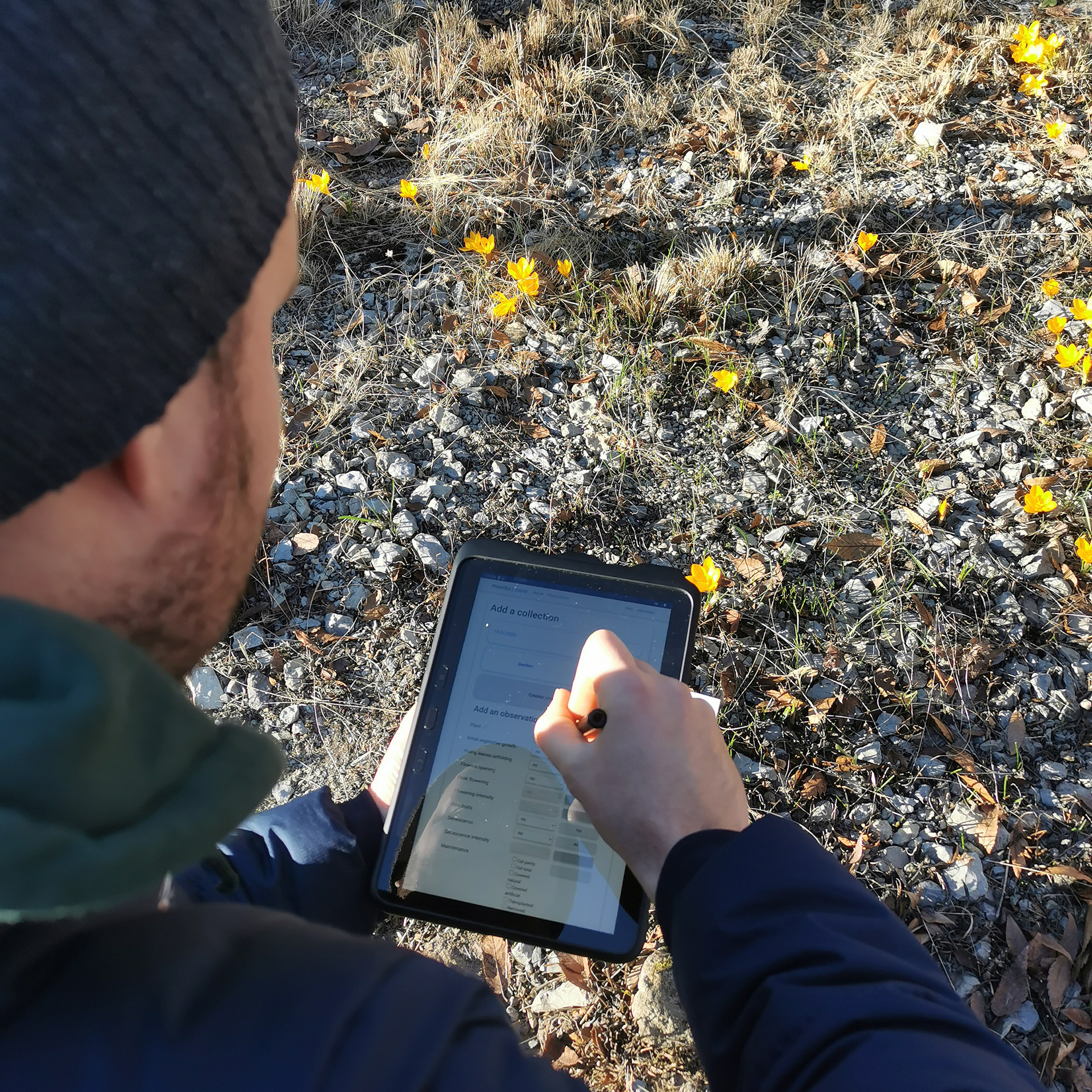
During the iDiv Summer School 2026, we want to give young scientists insights into different collections and how they can be utilised for ecological research. Participants will gather data using living collections of the botanical gardens in Leipzig and Jena, and the Herbarium Haussknecht (JE) in Jena. They will collect information such as the origin of the plants or specimens, measure functional traits and assess phenological stages. This approach will enable comparisons between species from all over the world, covering large taxonomic scales. The students will then analyse the data they have collected themselves, together with existing data, and present their findings.
For questions about the summer school, please contact summerschool@idiv.de.
Didactic aims and elements
The summer school is aimed at MSc students and doctoral researchers.
Participants will learn how to use herbaria for ecological research, in addition, they will learn to measure functional traits on living plants in the botanical garden and how to characterize different phenological stages
The focus of this course is on practical work by participants (hands-on sessions), followed by data analysis and presentations of results. These subjects are supplemented by lectures and discussions.
Basic statistical skills are required for this course. The analyses are performed using R software.