Based on a press release by Yokohama National University.
A global synthesis of 75 biodiversity experiments shows that biodiversity most strongly reduces productivity losses under extreme drought in more‑dry grasslands, while forests do not exhibit the same context‑dependent pattern. The study was led by researchers at Yokohama National University and the German Centre for Integrative Biodiversity Research (iDiv), and published in Nature Ecology & Evolution.
Across ecosystems, biodiversity is known to support productivity, but what has been less clear is where biodiversity matters most when climate extremes intensify. With droughts and heatwaves becoming more frequent in many places, this question is central to climate adaptation and ecosystem management. The study addresses this gap by identifying where biodiversity most effectively supports ecosystems under extreme climatic conditions.
“Our ultimate goal is to move away from a broad ecological insight to a practical basis for climate adaptation,” explains Takehiro Sasaki, first author of the study from Yokohama National University.
The study brought together data from 75 long‑term biodiversity experiments carried out in grasslands and forests with different climates. For each site, the researchers linked long‑term weather records, like daily precipitation and maximum temperate, and site-level information like aridity – dryness – and soil data. The analysis assessed whether aridity and soil nutrient conditions influenced biodiversity effects during drought or extreme heat.
They found that in more‑dry grasslands, plant biodiversity had its strongest positive effect on productivity during years of extreme drought. This effect was driven mainly by stronger complementarity among species, meaning species either contributed in functionally distinct and/or mutually supportive ways when water was scarce. In less‑dry grasslands, drought showed stronger selection effects meaning productivity relied more heavily on a few highly productive species.
Forests did not show comparable context dependence under extreme drought, although the authors emphasise that this does not mean that biodiversity is unimportant in forests. Other findings include that heat extremes did not produce clear context-dependent changes in biodiversity effects across ecosystem types or aridity gradients. Across both grasslands and forests, soil nutrient conditions did not detectably modify biodiversity effects under either drought or heat extremes, suggesting that water limitation may become a more important constraint on productivity than soil nutrient supply as climatic stress intensifies.
“This unprecedentedly comprehensive meta-study does not only highlight the importance of biodiversity in buffering climate extremes, it also identifies the conditions under which we can expect the strongest biodiversity benefits”, explains senior author Prof. Nico Eisenhauer, research group leader at iDiv and Leipzig University.
The researchers note that further exploration is needed to fully unpack the question of where biodiversity is going to make the biggest difference when climate extremes hit. In future, the researchers hope to improve their forest evidence by increasing the duration of studies, improving more sensitive indicators of drought for forest ecosystems, in addition to testing whether the effects of biodiversity are slower to emerge in forests than in grasslands.
Original publication
(Alumni and researchers with iDiv affiliation are bolded)
Sasaki T., Hoss D., Huang Y., Iwachido Y., Zheng L., Abdala‑Roberts L., Allan E., Auge H., Barsoum N., Bauhus J., Baum C., Beierkuhnlein C., Beyer F., Brancalion P., Cappelli S.L., Chu C., Craven D., Daniel C., Dolezal J., Ebeling A., Fagundes M., Ferlian O., Ganade G., Gebauer T., Gendreau‑Berthiaume B., Godbold D., Guerrero‑Ramírez N., Guillemot J., Hajek P., Hector A., Hölscher D., Jactel H., Jentsch A., Koricheva J., Kreft H., Kreyling J., Lanta V., Leps J., Lin W., Mendoza‑Espinosa M., Meredieu C., Messier C., Meyer S.T., Montagnini F., Muys B., Nock C., Paquette A., Parker W.C., Parker J.D., Parra‑Tabla V., Parrotta J., Paterno G.B., Pichon N.A., Piotto D., Polley W., Ponette Q., Potvin C., Reich P.B., Rewald B., Robin A., Roscher C., Sanden H., Scherer‑Lorenzen M., Schnabel F., Searle E.B., Siebenkäs A., Standish R.J., Tilman D., van Ruijven J., Verheyen K., Weigelt A., Weih M., Werner R., Wilsey B., Schmid B., Isbell F., Eisenhauer N. (2026) Biodiversity effects under climate extremes intensify with aridity in grasslands but not forests. Nature Ecology & Evolution. DOI: https://doi.org/10.1038/s41559-026-03127-w
Contact
Prof Dr Takehiro Sasaki
Yokohama National University
Phone: +81 45 339 3596
E-mail: sasaki-takehiro-kw@ynu.ac.jp
Prof Dr Nico Eisenhauer
Head of the research group Experimental Interaction Ecology
German Centre for Integrative Biodiversity Research Halle-Jena-Leipzig – iDiv
Leipzig University
Phone: +49 341 97 33167
E-mail: nico.eisenhauer@idiv.de
Christine Coester
Impact Unit
German Centre for Integrative Biodiversity Research Halle-Jena-Leipzig – iDiv
Telephone: +49 341 97 33197
E-mail: christine.coester@idiv.de
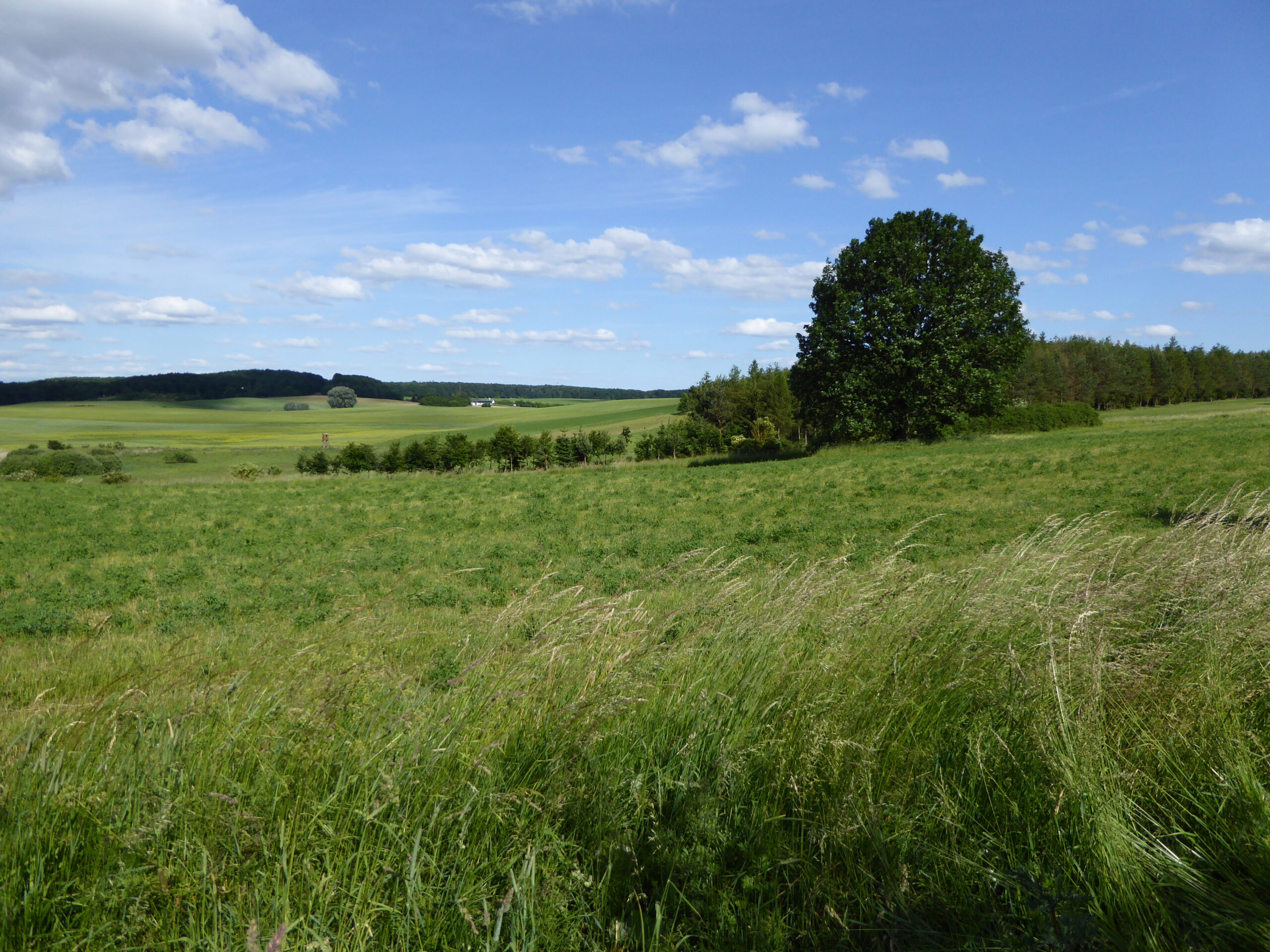
The study brought together data from 75 long term biodiversity experiments carried out in grasslands and forests with different climates.
Please note: Use of the pictures provided by iDiv is permitted for reports related to this media release only, and under the condition that credit is given to the picture originator.