More than 90 percent of local insect biomass decline in German grasslands is explained by species loss, according to a new study published in Nature Ecology & Evolution.
The research draws on 11 years of data from two long‑term research programmes where the scientists counted and identified arthropods – insects and spiders – then measured their biomass. In the study, total biomass refers to the weight of the arthropods in a community, that is, the combined weight of all the insects and spiders in the grassland ecosystems.
The international team led by researchers at the German Centre for Integrative Biodiversity Research (iDiv) and the Friedrich Schiller University Jena found that biomass declines over time were driven increasingly by the disappearance of common species. Losses among rare species or reductions in abundance – i.e., the number of individuals – within persistent species played a much smaller role.
“Our findings are concerning in two ways: not only is arthropod biomass declining, but over time communities have shrunk and their members became increasingly similar in their biomass contribution”, explains iDiv and the University of Jena’s Dr Benjamin Wildermuth, first author of the paper. “By the end of the study period, species loss, regardless of rarity or size, had become the main driver of that decline.”
Biomass data collected under different management conditions
The study’s data came from two research programmes in Germany: The Jena Experiment, which studies grasslands with controlled levels of plant species richness, and the Biodiversity Exploratories, which are real-world observatories covering grasslands managed with different degrees of land-use intensity.
The researchers used ecological modeling to track how arthropod biomass changed over the years, asking whether declines in arthropod biomass depend more on how many species disappear or which species are lost or replaced. They also looked at the impact of decreasing abundance among persisting species. These distinctions, especially between the number of species lost and the identity of those species, are a key and unique feature of the study.
In the early years, the data showed the identity of species mattered: losing rare but larger species had a disproportionate impact on biomass change, buffering the overall biomass decline — illustrated by the difference between losing a large but rare grasshopper or a small but common flea beetle, though this is only an example and not drawn from the study itself. Later on, all species contributed more equally to biomass decline. The researchers also found that over time shrinking abundances in persisting species only accounted for five to eight per cent of the decline.
Another finding was that plant species richness and low-intensity land use promoted larger arthropod communities – in terms of biomass, species richness and abundance – and led to biomass being spread across many different species with varying abundance and individual size.
Every species matters
Arthropods are a crucial link in grassland food webs. When the overall biomass decreases and becomes concentrated in just a few species, communities lose diversity and become more vulnerable to environmental pressures.
The study was motivated by concerns that declining arthropod biomass may weaken food webs and disrupt ecosystem functions — from nutrient and carbon cycling to the flow of energy to species that depend on arthropods as prey.
“Our study once again demonstrates that effective conservation requires a holistic approach”, says iDiv member Dr Anne Ebeling of the Friedrich Schiller University Jena and senior author of the paper. “Every species plays a role in the functioning of an ecosystem, so we cannot afford to lose any of them.”
The authors suggest that a possible strategy to counteract the ongoing simplification of arthropod communities is to diversify grasslands, and to maintain existing species‑rich grasslands. They also note the findings should be inferred with caution as they only investigated local arthropod communities in temperate grasslands.
Original publication
(Researchers with iDiv affiliation bolded)
Wildermuth, B., Bröcher, M., Ladouceur, E., Meyer, S. T., Schielzeth, H., Staab, M., Achury, R., Blüthgen, N., Hertzog, L., Hines, J., Roscher, C., Schweiger, O., Weisser, W. W., Ebeling, A. (2025). Arthropod species loss underpins biomass declines. Nature Ecology & Evolution. DOI: https://doi.org/10.1038/s41559-025-02909-y
Contact
Dr Benjamin Wildermuth
German Centre for Integrative Biodiversity Research (iDiv) Halle-Jena-Leipzig
Friedrich Schiller University Jena
E-Mail: benjamin.wildermuth@idiv.de
Christine Coester
Media and Communications
German Centre for Integrative Biodiversity Research (iDiv) Halle-Jena-Leipzig
Telephone: +49 341 97 33197
E-Mail: christine.coester@idiv.de
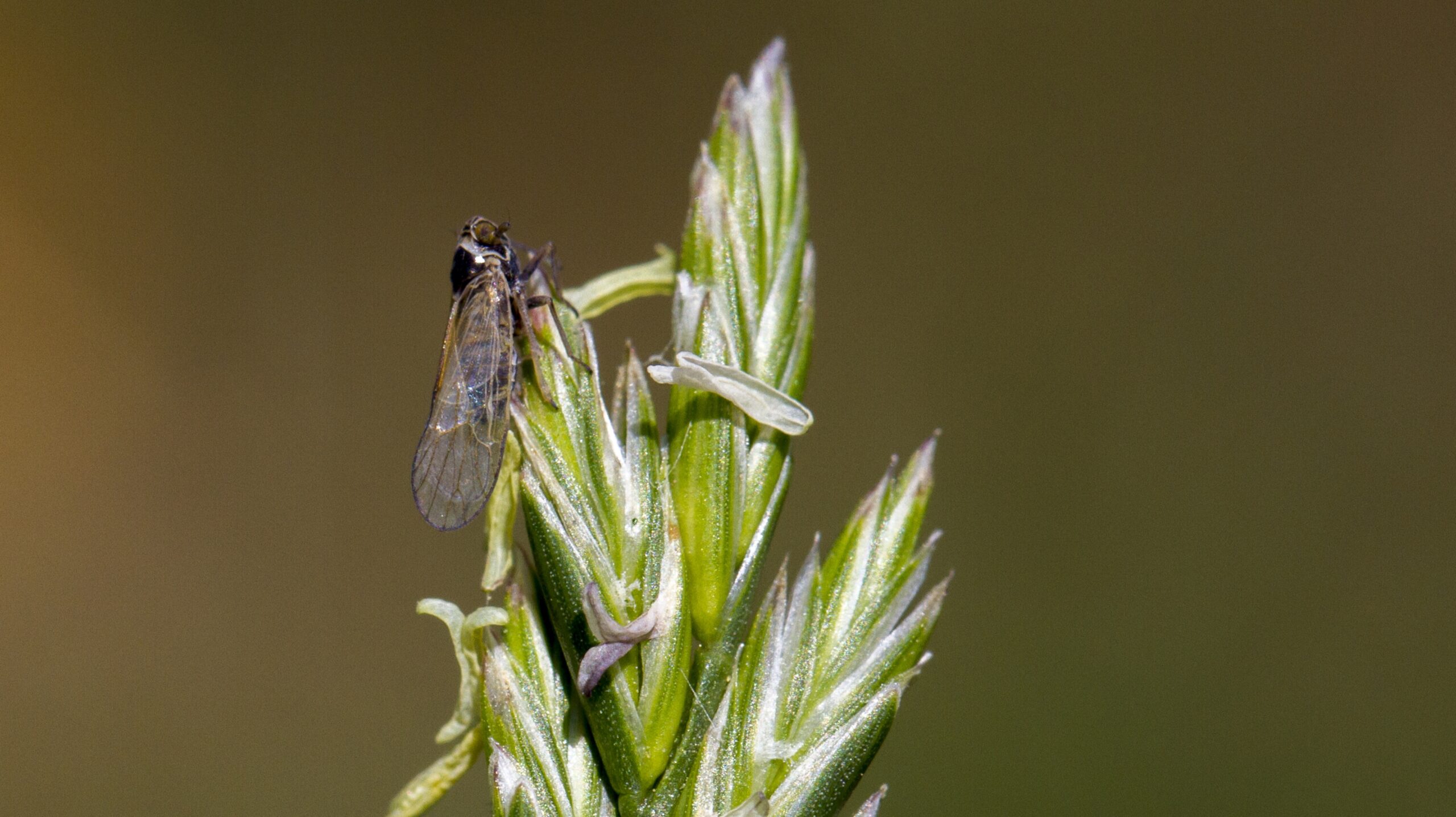
Planthoppers were one of the insects studied.
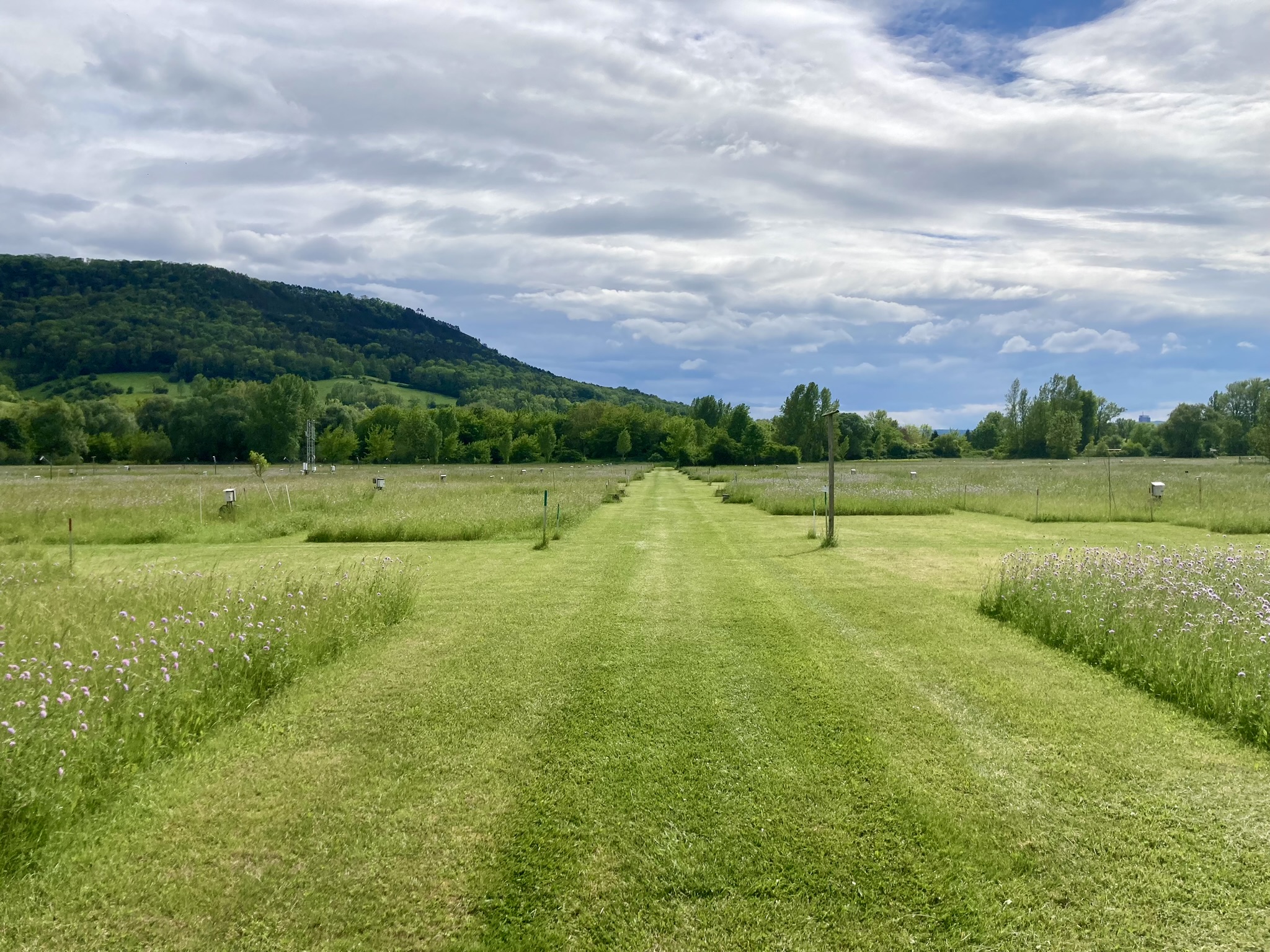
Data was collected at the Jena Experiment, one of the two research programmes featured in the study.
Please note: Use of the pictures provided by iDiv is permitted for reports related to this media release only, and under the condition that credit is given to the picture originator.