How will bird populations develop under changing climate and land-use conditions? And what role do animal behaviour and culture play in biodiversity conservation? Two new junior research groups, BirdFutures and Behavioural Conservation, have started at the German Centre for Integrative Biodiversity Research (iDiv). They investigate different dimensions of biodiversity change and conservation.
Biodiversity loss poses complex challenges for science, policy, and conservation. Developing options for effective conservation measures requires not only documenting changes in species and populations but also gaining a better understanding of the potential consequences of human activities and environmental change. Two new junior research groups at iDiv are addressing these challenges from different perspectives.

The BirdFutures junior research group, led by Dr Tatiane Micheletti, who conducts research at both the Helmholtz Centre for Environmental Research (UFZ) and iDiv, investigates how bird populations may develop under different climate and land-use scenarios. The group is part of the new TripleBird Project, which was launched by the UFZ in partnership with the German Federation of Avifaunists (DDA) and in collaboration with iDiv and the University of Potsdam.
Using scenarios to explore the future of bird populations
Birds are among the best-documented groups of animals. For many species, long-term data are available on population trends, ranges, and ecological characteristics. TripleBird aims to bring these data together with climate, environmental, and land-use data to assess how biodiversity changes across space and time, while developing applications for different areas of society.
BirdFutures aims at developing scenarios to identify how different measures influence current bird trends to support better decision-making towards a nature-positive future. These models can be used to explore different scenarios relating to both land use and climate. What would be the consequences of a shift towards more extensive farming? How would an increase in the proportion of fallow land or the expansion of hedgerow networks affect bird species?
The models will enable different policy measures and management strategies to be compared and evaluated. In the future, they could help decision-makers in nature conservation, politics and public authorities assess the potential impacts of their decisions on biodiversity.
“For me, the most powerful conservation science doesn’t just describe the past; it helps us navigate the future. We have incredible, long-term bird monitoring data, but this data often remains disconnected from the urgent decisions being made in policy and land management every day”, Tatiane Micheletti says. “My passion lies in bridging this exact gap. Through BirdFutures, we use ecological models as translators – turning complex data into clear, evidence-based scenarios that allow decision-makers to explore the consequences of their actions before they take them. It’s about transforming hindsight into foresight.”
Animal behaviour as a dimension of biodiversity
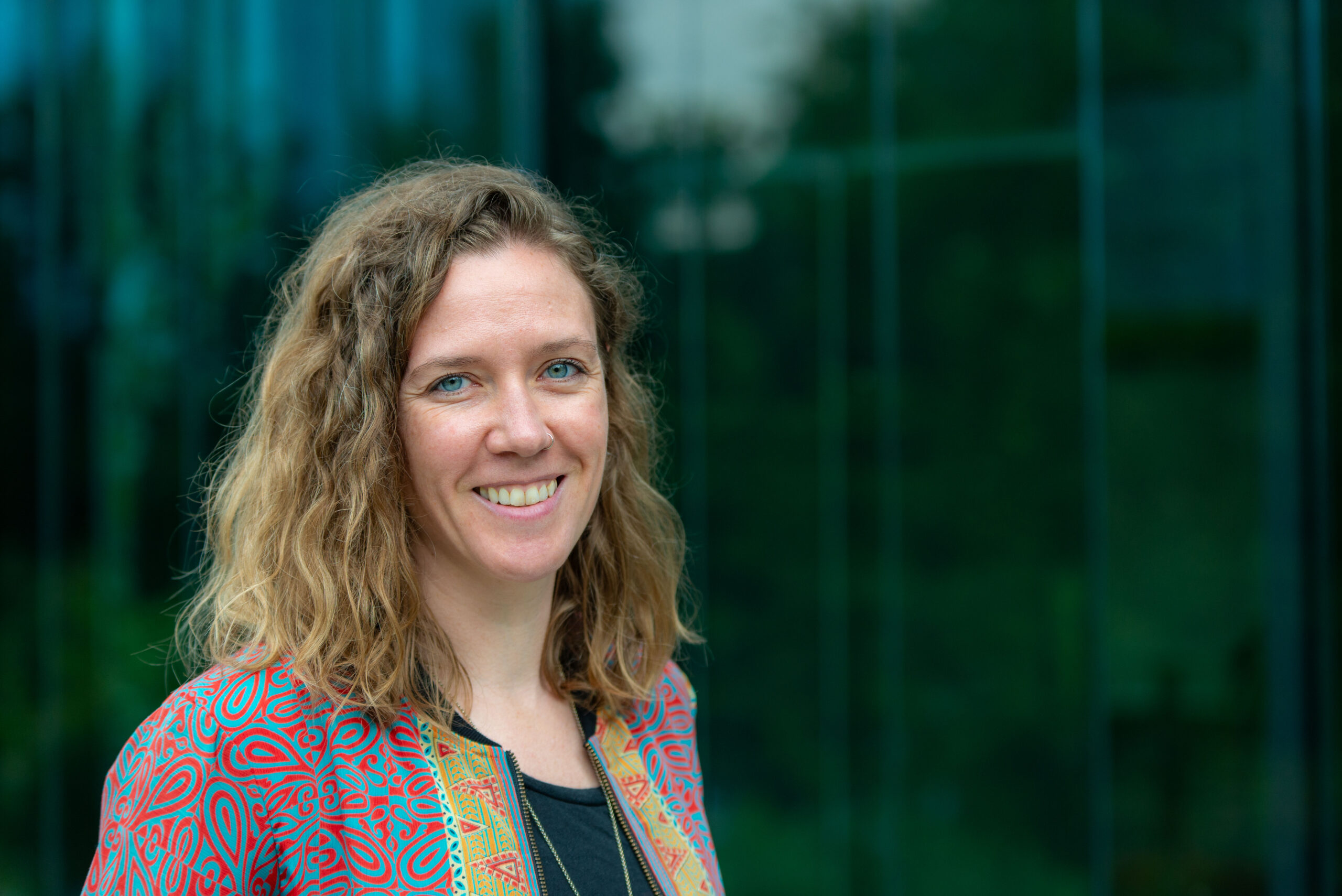
The new Behavioural Conservation junior research group takes a different perspective on biodiversity and conservation. Led by Dr Erin Wessling, who is affiliated with both the Max Planck Institute for Evolutionary Anthropology and iDiv, the group investigates how animal behaviour and culture contribute to biodiversity and species longevity, and how they can be practically incorporated into conservation planning and action.
Using chimpanzees and bonobos as primary study systems, the group treats behaviour and behavioural flexibility as adaptations and therefore as dimensions of biodiversity. A central aim is to advance recognition of behavior and culture as core components of biodiversity, while identifying when and where they warrant explicit consideration in conservation planning and action.
The group focuses on monitoring and managing these dimensions in real-world conservation settings and works closely with conservation practitioners to identify when behaviour-focused strategies add value and how behavioural and cultural information can inform day-to-day decision-making. This includes integrating behavioural data into spatial planning, developing biomonitoring frameworks that incorporate animal cultures, and assessing management options.
Consider, for example, a protected area in which chimpanzees display a rare behaviour that has not been observed anywhere else. A park manager may consider this behaviour worth protecting – but what would that mean in practice? Beyond protecting the chimpanzees and their habitat, are additional measures needed to safeguard the behaviour itself? And how could the behaviour and the places where it occurs be monitored over time? These are precisely the kinds of practical questions the group seeks to address.
Long-term field platforms, including the BonDiv Project, which studies bonobo behavioural ecology across the Congo Basin, and the Moyen-Bafing Chimpanzee Project, which focuses on the behavioural ecology of western chimpanzees in an arid savanna–mosaic, provide complementary systems for addressing these questions and trialling applied approaches.
“After a few years of increasing advocacy to consider the role of behaviours as a critical component of biodiversity and to species resilience and adaptation, we’re starting to see the tides turn towards recognizing behaviour and multiple scales – including on global conservation stages like within IUCN. We have multiple practical and empirical examples of how behaviours sit at the core of conservation successes, but until now considering behaviour, especially cultures, in applied conservation has been relatively underapplied,” Erin Wessling states. “So now the hard work comes to figure out how this advocacy can translate into meaningful conservation outcomes.”
New perspectives on biodiversity and conservation
With BirdFutures and Behavioural Conservation, two new junior research groups are expanding research at iDiv by adding different perspectives on the future of biodiversity. Both groups share the goal of making new scientific knowledge useful for practical decision-making and effective biodiversity conservation.
“With Tatiane Micheletti and Erin Wessling, we have been able to attract two outstanding researchers to iDiv who will help shape the future of integrative biodiversity research. Their junior research groups complement iDiv’s profile in integrative biodiversity research and support our mission to lay the scientific foundation for measures aimed at the conservation and sustainable use of biodiversity”, says Martin Quaas, Scientific Director of iDiv.
Contact
Dr Tatiane Micheletti
Head of Junior Research Group BirdFutures
Helmholtz Centre for Environmental Research – UFZ
German Centre for Integrative Biodiversity Research Halle-Jena-Leipzig – iDiv
Phone: +49 341 9733238
Email: tatiane.micheletti@idiv.de
Dr Erin Wessling
Head of Junior Research Group Behavioural Conservation
Max Planck Institute for Evolutionary Anthropology
German Centre for Integrative Biodiversity Research Halle-Jena-Leipzig – iDiv
Email: erin.wessling@idiv.de
Kati Kietzmann
Head of Public Relations
German Centre for Integrative Biodiversity Research Halle-Jena-Leipzig – iDiv
Phone: +49 341 97 39222
Email: kati.kietzmann@idiv.de