iForm is an integrated framework for studying forest and other ecosystems across scales – from individual plants and local processes to landscape dynamics. Combining experimental, observational, and synthesis approaches, the four platforms allow researchers to examine biodiversity-climate interactions under both controlled and natural conditions. The complementarity of the platforms supports cross-disciplinary collaboration and links experiments with long-term and real-world data.
iForm’s four platforms
Leipzig Canopy Crane
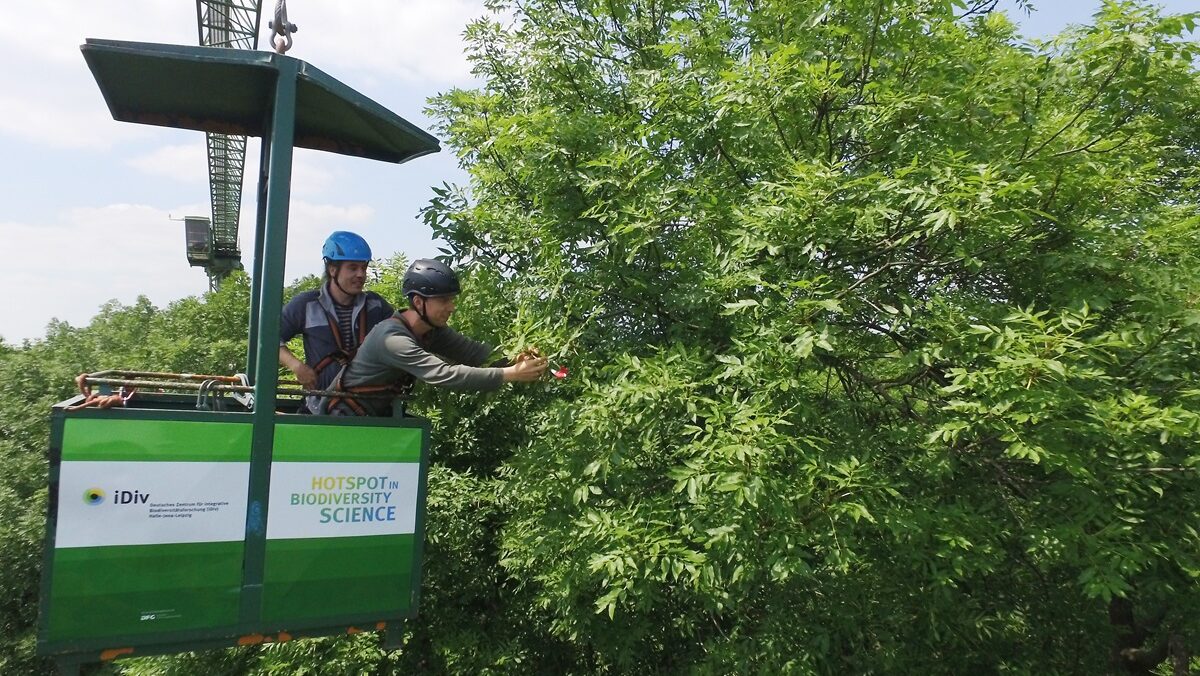
Established in 2001 through a collaboration between Leipzig University and the UFZ, the Leipzig Canopy Crane provides 3D access to the canopy of a species-rich, old-growth floodplain forest (1.6 ha, ~800 trees, 12 species). A dense sensor network records the microclimate, soil conditions, sap flux, phenology, and tree architecture. Together with detailed forest inventory data, the platform enables researchers to disentangle the drivers of biodiversity patterns and ecosystem functioning as well as test ecological hypotheses in a mature, structurally complex forest.
MyDiv
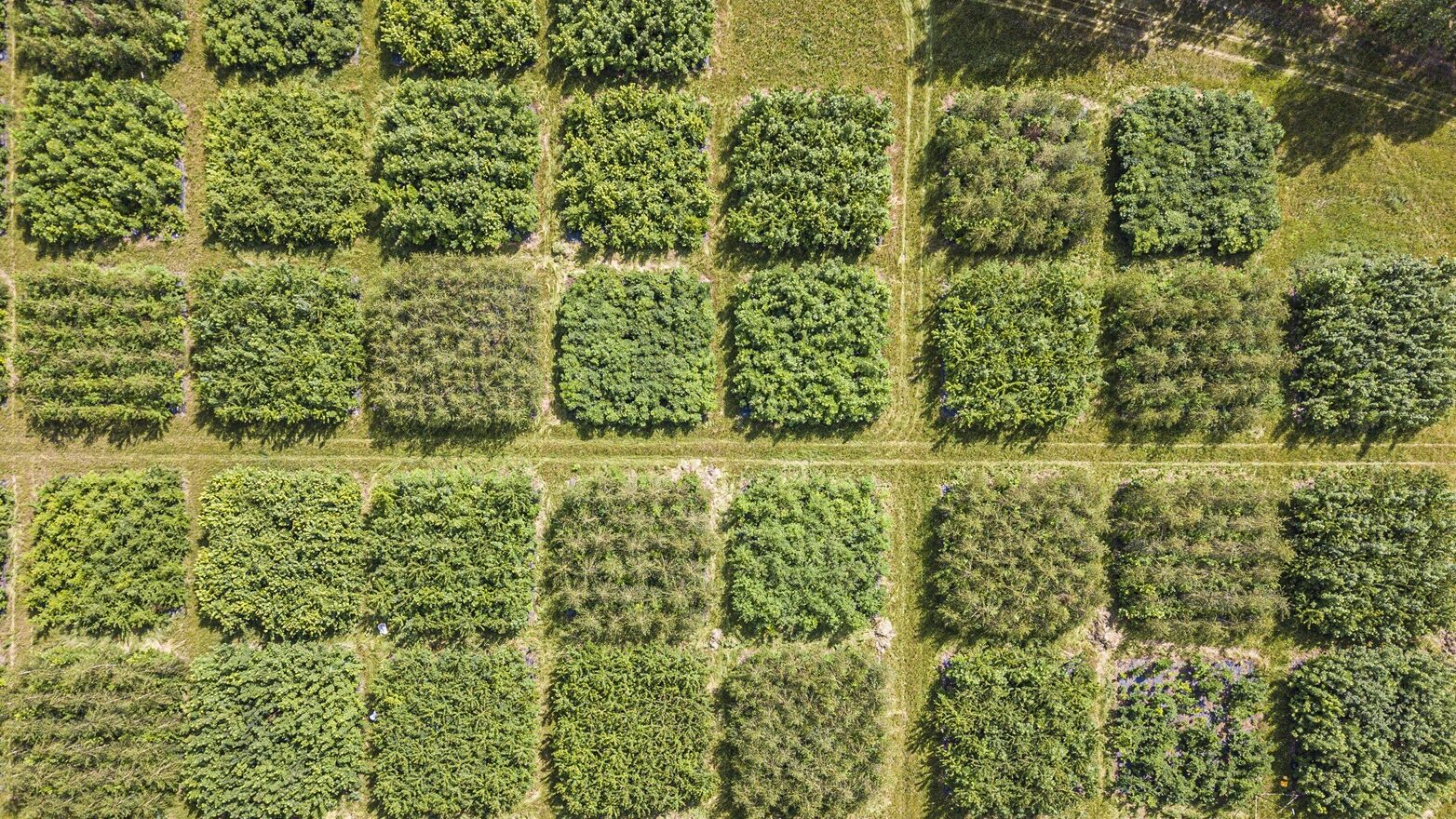
Founded in 2015, MyDiv examines how mycorrhizal associations influence relationships between tree diversity and ecosystem functioning and trophic interactions. Its 80 plots (one to four tree species, arbuscular vs. ectomycorrhizal associations) offer high-resolution data on the microclimate, tree growth, crown structure, soil biota, decomposition, and nutrient concentrations. The platform provides a powerful setting for studying biodiversity-ecosystem functioning relationships in realistic environmental conditions.
ARBOfun
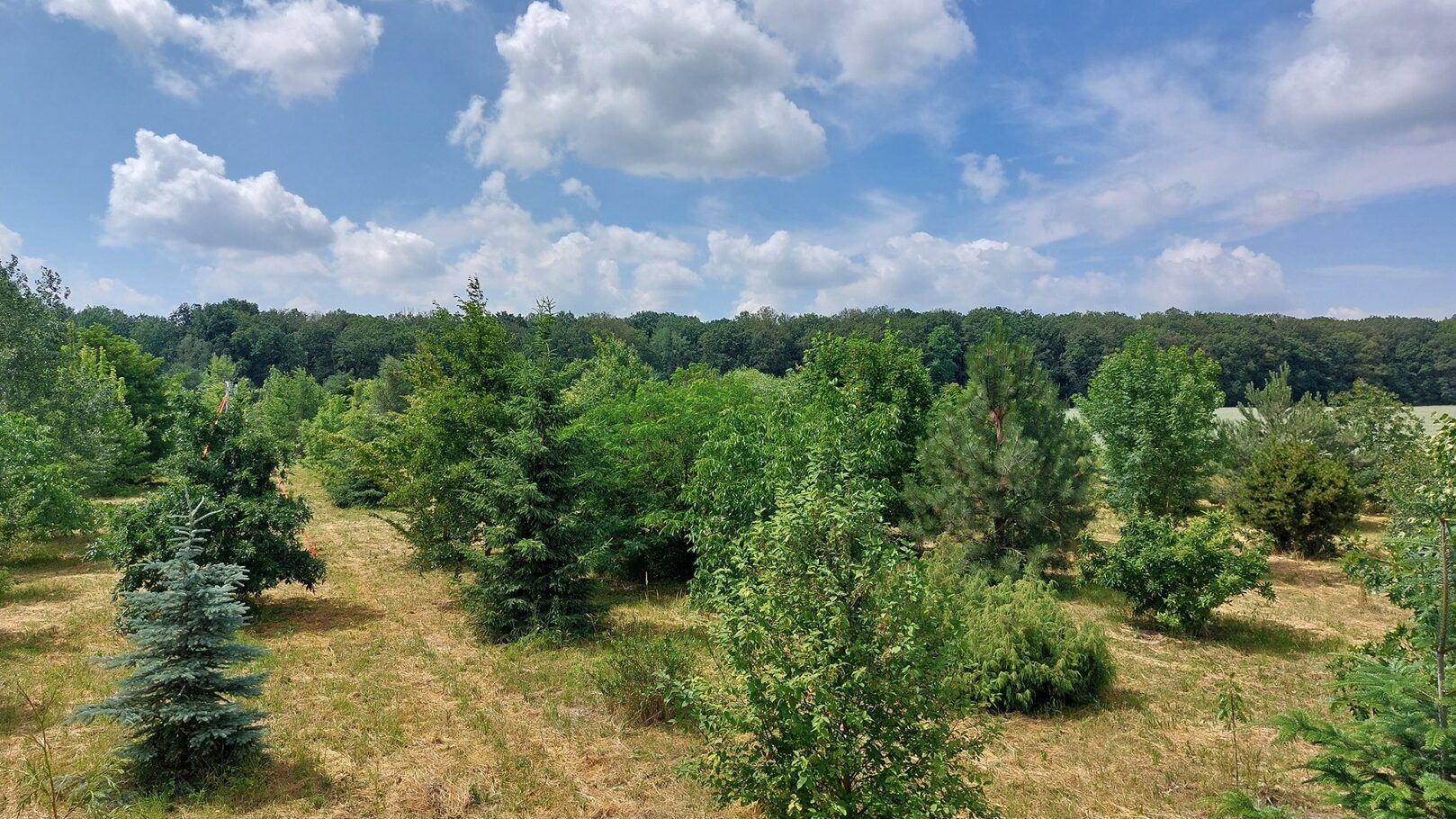
The Großpösna research arboretum ARBOfun (established in 2012) hosts 100 deciduous and coniferous tree species (five tree individuals per species), including 51 native trees, 26 commonly planted non-native trees, and 23 potentially climate-resistant submediterranean species. Forty focal species are equipped with sensors measuring sap flux, soil and air temperature, dendrometers, leaf angle cameras, and accelerometers. Supplemented by time-series data on phenology and overall tree performance, it can be studied how different tree species respond to climate change and if this can be explained based on their traits.
iDiv Ecotron
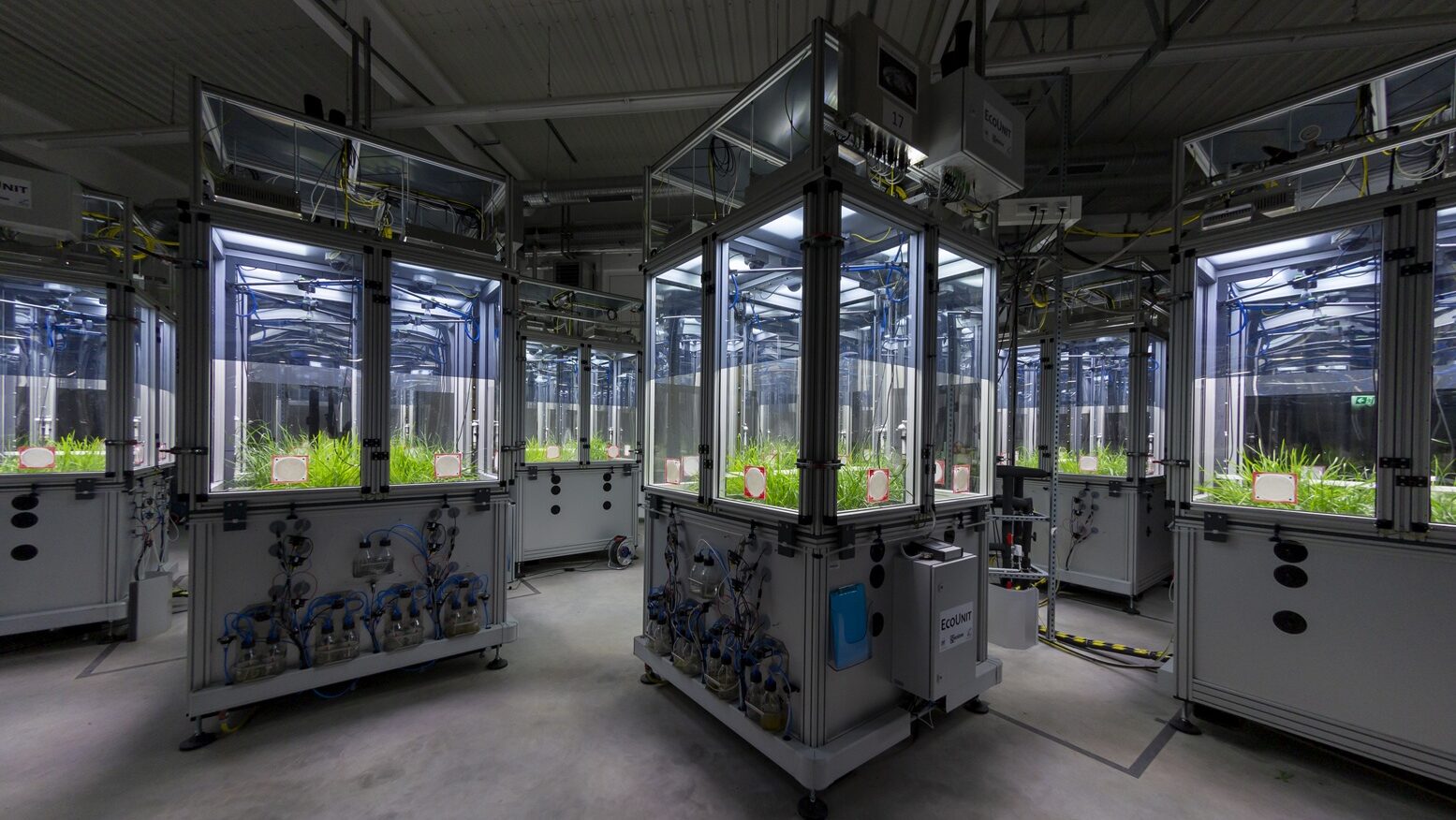
Established in 2017 through a collaboration between the UFZ and iDiv, the iDiv Ecotron is comprised of 24 EcoUnits (each of which can be divided into four subunits, for a total of 96 experimental units) that allow controlled experimental manipulation of biotic communities and abiotic environmental conditions (precipitation, light, irrigation, nutrients). Intact soil monoliths or reconstructed soil profiles permit investigation of multitrophic interactions and ecosystem functioning under controlled yet realistic conditions.
Opportunities for iDiv members
iDiv members are welcome to submit short proposals to the respective research platform coordinators. Proposals should include hypotheses, methods, timeline, and basic data needs (templates are available). While ARBOfun and MyDiv host projects year-round, the Leipzig Canopy Crane and iDiv Ecotron require more advanced planning due to limited capacities and experimental slots. iDiv-wide calls periodically invite broader contributions to planned projects. Small bench fees apply, with discounted rates for iDiv members.
Where Your Expertise Matters: Key Research Gaps
All four platforms are open to complementary research ideas, but a particular need for collaboration has been identified in the following fields:
- Quantifying associated forest biodiversity
There is a strong need for more data on associated aboveground and belowground biodiversity – from microorganisms and soil fauna to cryptogames and insects – and its temporal dynamics across tree species and diversity gradients. Opportunities include metabarcoding, bioacoustic monitoring, high-resolution sensor networks, automated sampling, and analytical frameworks to link large heterogeneous datasets to ecosystem processes and improve our mechanistic understanding.
- Tree species imprints on soil processes
Species are expected to differ markedly in organic inputs (e.g. through leaf and root litter, root exudates) and root exudates, shaping nutrient availability, soil acidity, cation exchange, and carbon turnover. High-resolution monitoring of soil chemistry, nutrient fluxes, and fine-root dynamics is needed to track short-term shifts and to understand how tree species identity, composition, and diversity influence key biogeochemical pathways.
- Biodiversity and mental health
Although biodiversity is linked to human well-being, the mechanisms – especially regarding mental health – remain poorly understood. The platforms offer settings ranging from natural forests to controlled mesocosm experiments for studying how biodiversity changes affect well-being and how individual traits mediate these responses. Pilot studies exist (e.g. at MyDiv and ARBOfun), but more comprehensive, in-depth research is needed.
Want to visit the platforms?
iForm continues to offer excursions to all four platforms, including ad-hoc visits for developing new project ideas.
Contact
MyDiv and iDiv Ecotron
Nico Eisenhauer (Head of Platform): nico.eisenhauer@idiv.de
Olga Ferlian (Platform Coordinator): olga.ferlian@idiv.de
Leipzig Canopy Crane and ARBOfun
Christian Wirth (Head of Platform): c.wirth@uni-leipzig.de
Alexandra Weigelt (Main PI of iForm): alexandra.weigelt@uni-leipzig.de
Ronny Richter (Platform Coordinator): ronny.richter@idiv.de