This text is based on a press release by the Senckenberg Society for Nature Research.
A new study published in Nature Communications shows that between 66 and 23 million years ago, a regional arid phase – in addition to global temperature shifts – played a decisive role in shaping the evolution of mammalian communities. The research was led by an interdisciplinary team from the Senckenberg Biodiversity and Climate Research Center, the German Centre for Integrative Biodiversity Research (iDiv), and the Friedrich Schiller University Jena.
The Paleogene period, approximately 66 to 23 million years ago, was a pivotal era in mammalian evolution. After the dinosaurs became extinct about 66 million years ago, mammals rapidly established themselves as the dominant group of terrestrial vertebrates. However, how these animal communities changed over this long period, and what role climate change played in this process, was not clear prior to this study. With a focus on Central Asia, first author Dr Gemma Louise Benevento, a researcher at iDiv and the University of Jena, and formerly with the Senckenberg Biodiversity and Climate Research Center, investigated these questions.
“Based on fossil finds in Mongolia and China, we have reconstructed the taxonomic diversity and composition of mammalian communities, as well as the evolution of the animals’ body mass over time,” Benevento explains. “In the process, we identified three phases marked by significant changes in our study area in Central Asia during the Paleogene. These shifts in the evolution of mammalian communities coincide with major climatic events during this period. First, with the rapid warming phase of the Paleocene-Eocene Thermal Maximum about 56 million years ago; second, with the cooling at the transition from the Eocene to the Oligocene about 33.9 million years ago. As a third climatic change – occurring between these two events – we were also able to identify an additional regional aridification phase in Central Eastern Asia during the Middle Eocene.”
During the Paleocene-Eocene Thermal Maximum about 56 million years ago, the Earth’s temperature increased by about five to ten degrees Celsius over a relatively short period of about 100,000 years. This “greenhouse world” then began to change about 33.9 million years ago, when a phase of gradual cooling and aridification ushered in a long-term transition to a cooler “icehouse world” with ice caps covering the poles.
“In addition to these global climate events, several recently published geological and ecological analyses have provided evidence of a period of aridification in Central Eastern Asia as early as the Middle Eocene, about 40 million years ago,” adds senior author Prof Susanne Fritz, head of the Biodiversity in the Anthropocene research group at iDiv and the University of Jena. “These studies are based on indicators such as weathering intensity, which decreases in arid regions, and pollen, which serves as an indicator of past environmental conditions.”
For this period, an increase in pollen species typical of desert landscapes was observed. Using climate model simulations, the authors were able to independently confirm this regional arid phase. Their climate models also indicate that the environment in this region became drier about six million years earlier than previously assumed.
According to the study, global warming resulting from the Paleocene-Eocene Thermal Maximum, which was accompanied by the greening of inland deserts, fostered a high diversity of mammals, which tripled during this period. In contrast, the subsequent aridification and cooling are believed to have led to a decline in species diversity, a decrease in body size, and, overall, a significant transformation of animal communities.
“The fact that the arid phase began earlier in Central Asia than in other parts of the world is likely linked to changes in air currents caused by the retreat of the Paratethys Sea – a vast, now-vanished inland sea in Eurasia – and the uplift of the Tibetan Plateau,” Benevento says. “It is particularly noteworthy that this regional aridification phase apparently impacted mammalian communities to a similar degree as the ‘major’ global climate events. This also allows us to draw conclusions regarding today’s climate change and global warming.”
To identify the most significant threats to present-day biodiversity, it is essential to consider regional and local changes – such as water availability, atmospheric moisture transport, or habitat shifts, she continues, adding that “this is the only way we can reliably assess how today’s mammal communities will respond to future changes in climate and the environment.”
Publication
Benevento, G.L., Meijer, N., Brugger, J., Mulch, A., Hickler, T., & Fritz, S.A. (2026). Global and regional climate change impacted Paleogene mammal faunas in Central Asia. Nature Communications. DOI: 10.1038/s41467-026-77374-7
Contact
Dr Gemma Louise Benevento
German Centre for Integrative Biodiversity Research Halle-Jena-Leipzig – iDiv
Friedrich Schiller University Jena
Senckenberg Biodiversity and Climate Research Center Frankfurt
Phone: 0341 9733242
E-mail: gemma.benevento@idiv.de
Christine Coester
Impact Unit
German Centre for Integrative Biodiversity Research Halle-Jena-Leipzig – iDiv
Phone: +49 341 97 33197
E-mail: christine.coester@idiv.de
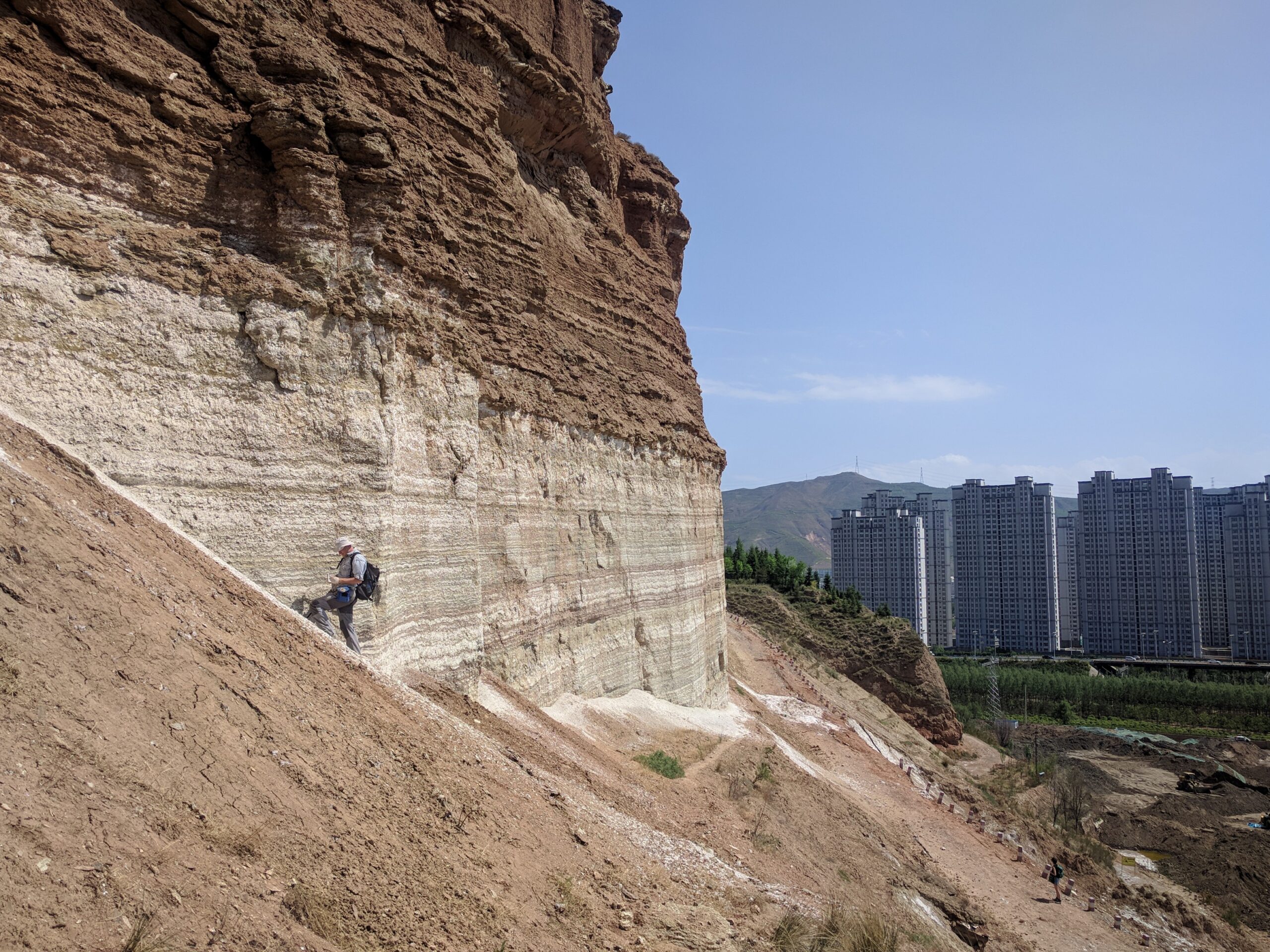
Using fossil finds and climate model simulations, the research team investigated the impact of climate change on mammalian diversity in Central Asia between approximately 66 and 23 million years ago. The Xining Basin – pictured here – is located in the study area in Central China.
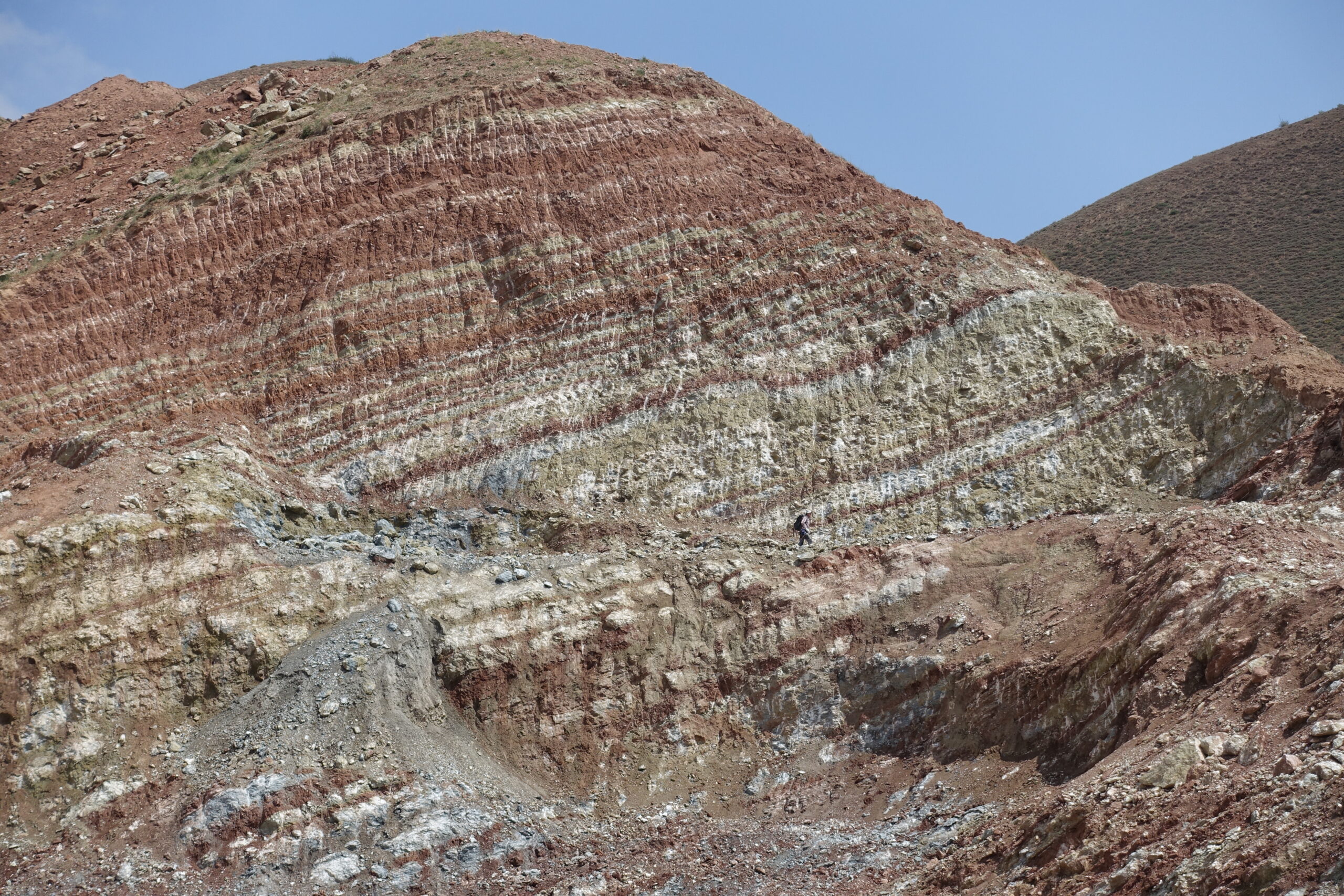
Geological data from the Xining Basin on weathering and pollen composition suggest a regional arid phase during the Middle Eocene.
Please note: Use of the pictures provided by iDiv is permitted for reports related to this media release only, and under the condition that credit is given to the picture originator.